NZQA has retired external evaluation and review and consistency reviews, but kept the requirement for an effective moderation system. For a PTE Head of Training, that makes internal moderation your main evidence that assessor judgements are fair, valid and consistent. So design it to be workable, not exhaustive.
Key takeaways
- The 2026 rules shift weight onto self-review and monitoring, but the requirement for an effective system for moderating assessment materials and decisions remains.
- Where you hold consent to assess, national external moderation participation is mandatory, so internal moderation is your preparation for it.
- NZQA's own test, that moderation should be workable and practical for assessors and moderators, is a sound design brief for your internal system.
- Check each standard's Consent and Moderation Requirements (CMR) to confirm who runs moderation, as ISBs now carry moderation roles for the standards they set.
- Cut any moderation activity that produces paperwork but no change in assessor behaviour.
Why this lands on your desk
You own the quality of assessment across your trainers. When two assessors judge the same evidence differently, nobody else is positioned to spot it first, and now there are fewer outside checkpoints to do it for you.
The Private Training Establishment Rules 2026 came into force on 19 January 2026, according to NZQA's PTE rules page. The wider reset aligns NZQA's rules with the integrated Quality Assurance Framework and vocational education changes. The practical effect for you is that credible quality evidence has to come from inside your organisation.
What the 2026 reset changed, and what it didn't
The Programme Approval, Recognition and Accreditation Rules 2026 remove references to external evaluation and review and replace them with self-review and monitoring. They also remove references to consistency reviews, which were discontinued from 1 January 2026.
The same rules still include criteria for assessment and moderation: an effective system for moderation of assessment materials and decisions. That wording covers both the tasks you set and the judgements your assessors make.
National external moderation also continues. NZQA says it makes sure assessment decisions for NZQA-managed standards are consistent nationally, and a TEO with consent to assess must participate. It must also provide an accurate annual assessment plan and update it during the year if needed.
So the external safety net has narrowed, while the obligation to show your own system works has not.
Use NZQA's design test: workable and practical
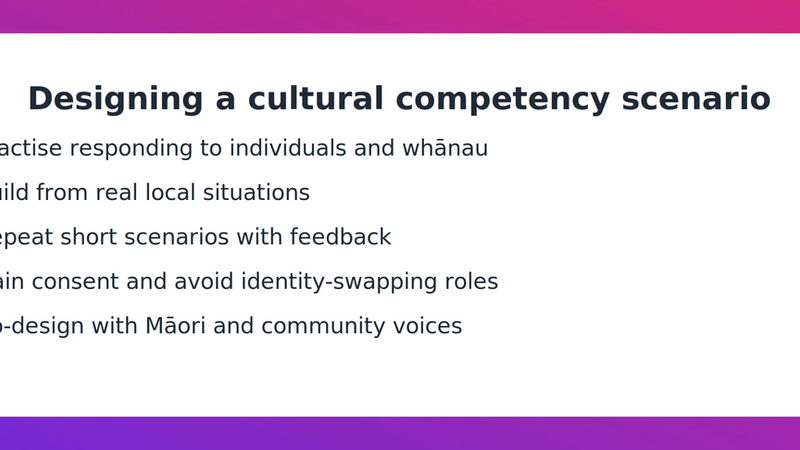
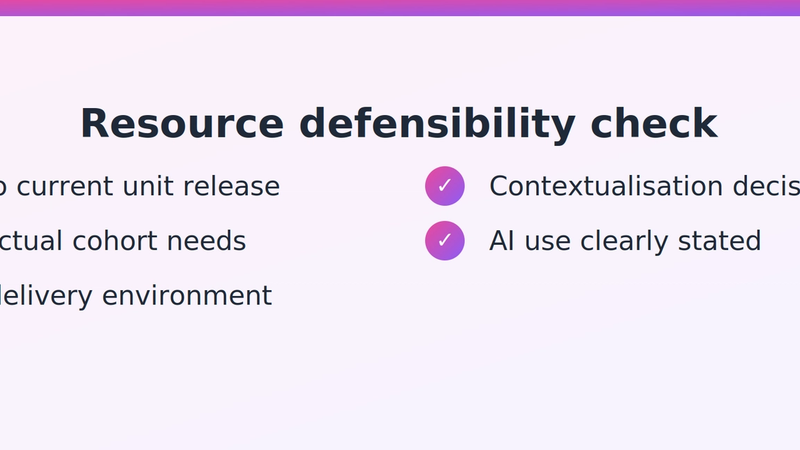
NZQA's national external moderation principles describe good practice as fair, valid and consistent. They also say moderation systems should be workable and practical for assessors and moderators.
That last phrase is the most useful line in the framework for you. It means a system your trainers dread, or quietly skip when delivery gets busy, fails the test before any auditor looks at it.
Ask of every moderation step: does this change a judgement or improve a task? If not, it is a candidate for removal.
A moderation cycle you can run this quarter
The following is my suggested structure, not an NZQA prescription. Adapt it to your programme size and risk.
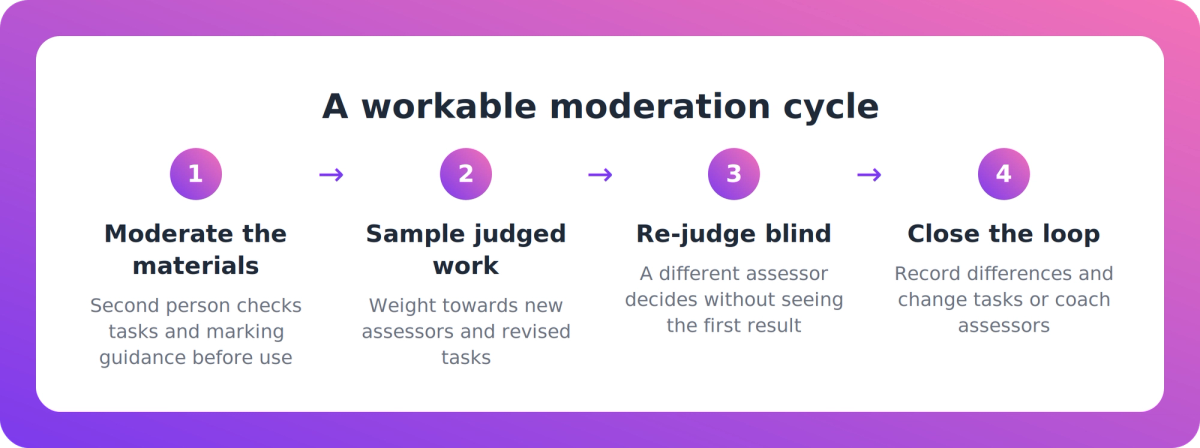
Before assessment: moderate the materials
Have a second person check each assessment task against the standard before it goes to learners. Focus on whether the task actually elicits the evidence the standard requires, and whether the marking guidance is clear enough for two people to apply it the same way.
After assessment: moderate the decisions
Pull a sample of judged work and have a different assessor re-judge it blind. Weight the sample towards new assessors, newly revised tasks and standards where past disagreements occurred.
Illustrative example: three trainers each judge the same borderline portfolio. Two say competent, one says not yet. That disagreement is the finding. The useful output is not a form but a short note on which piece of evidence split them and how the marking guidance will change.
Close the loop
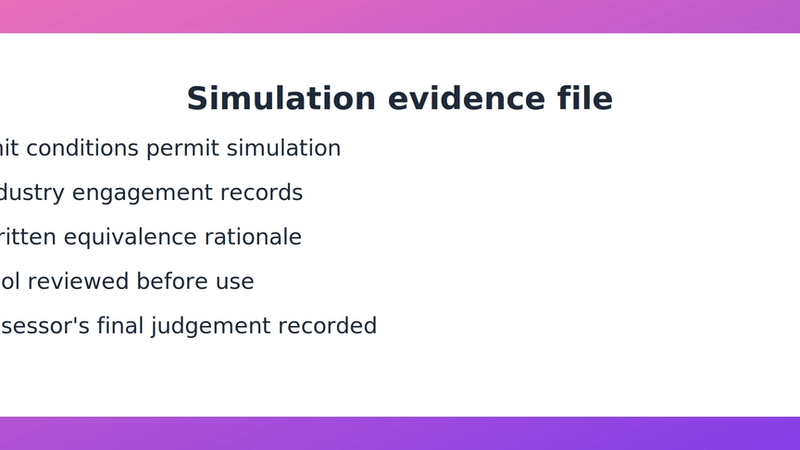
Feed what you learn into task revisions, assessor conversations and your self-review. One page per cycle recording what was checked, what differed and what changed is enough to show the system operates. If you want a companion read, we have covered assessment consistency across trainers from a similar angle.
Check who moderates what
Responsibility is moving. TEC says ISBs were established formally from 1 January 2026, with standard setting as their core role. NZQA's ISB rules require ISBs to carry out moderation activities for the standards and capstone assessments they set.
The practical first step is to open the CMR for each standard you assess. Some CMR documents note standards moving to an ISB from 1 January 2026, as in this example. The CMR tells you who moderates, and what you need to submit.
Check sample sizes there too. One older NZQA guidelines page mentions submitting 8 learner samples rather than 3, but the context is unclear, so confirm the figure in the relevant CMR rather than assuming.
What to simplify
Build one system that serves both internal and external purposes. If your internal sampling mirrors what national external moderation will ask for, you are rehearsing every cycle instead of scrambling once a year.
Keep your annual assessment plan tied to your timetable. An accurate plan is a requirement, and a plan written separately from delivery will drift.
Stop moderating everything equally. Low-risk, stable, well-performing tasks can be sampled lightly, which frees time for the new and contested ones.
Finally, stop collecting evidence nobody reads. If a moderation record has never been used to change a task or coach an assessor, it is paperwork.
One caution: the research I have drawn on does not quantify trainer workload or burnout in New Zealand, so I am not claiming a number here. The case rests on the regulatory change and on your own timesheets.
Our take
The reset has been read as relief, with fewer external reviews to prepare for. I read it as a transfer of proof. The standard of evidence has not dropped; the burden of producing it has moved to you.
The Heads of Training who do well will treat moderation as a teaching tool for assessors, not an audit artefact. A system that makes judgements more consistent also makes your self-review credible almost as a by-product.
FAQ
Did NZQA remove moderation requirements in 2026?
No. The 2026 programme rules removed references to external evaluation and review and to consistency reviews, but still require an effective system for moderating assessment materials and decisions. National external moderation continues for providers with consent to assess.
Is national external moderation optional for a PTE?
Not where you hold consent to assess. NZQA's guidelines say a TEO with consent to assess must participate, and must provide an accurate annual assessment plan, updating it during the year if needed.
How do I know who moderates a particular standard?
Read the standard's Consent and Moderation Requirements (CMR). ISBs now carry moderation activities for the standards and capstone assessments they set, and some CMR documents note standards moving to an ISB from 1 January 2026.
What makes internal moderation "effective"?
NZQA's principles define good practice as fair, valid and consistent, and say systems should be workable and practical for assessors and moderators. A system that is actually used, and changes tasks and judgements, meets that test better than one that is merely documented.
Next step
This week, pick three standards you assess and open each CMR. Note who moderates, what must be submitted and when. Then ask two trainers which part of your current moderation process they would drop first, and listen carefully to the answer.