PTE Reporting Process Improvement NZ: Reclaim the SDR Week
The reporting week is a process-design problem that TEC's own tools now make visible. Here is how operations leaders can turn SDR and funding returns into a by-product of daily work.
Resources
Practical guides to the regulatory changes, our AI Blueprint whitepapers, free CPD, and the latest from the blog.
Start here
A roadmap for RTOPTE leaders on moving compliance, mapping and assessment writing to AI so trainers can teach. AustralianNew Zealand edition.
Get the whitepaper → Guide · AustraliaWhat the 2025 Training Package Organising Framework changes, which units convert when, and how to upgrade your tools as they do.
Read the guide → Guide · New ZealandThe move to skill standards under the Industry Skills Boards: what changes for providers and how to stay moderation-ready.
Read the guide → Checklist · AustraliaThirty checks across the four Quality Areas of the 2025 Standards, in the order an auditor asks them.
Get the checklist → Guide · New ZealandWhat NZQA expects before you assess against a standard, and how to keep the evidence in order.
Read the guide →A small-group programme for trainers, assessors and quality leads, hands on with VETos and Nova 5 on your own unitsstandards.
The blog
The reporting week is a process-design problem that TEC's own tools now make visible. Here is how operations leaders can turn SDR and funding returns into a by-product of daily work.
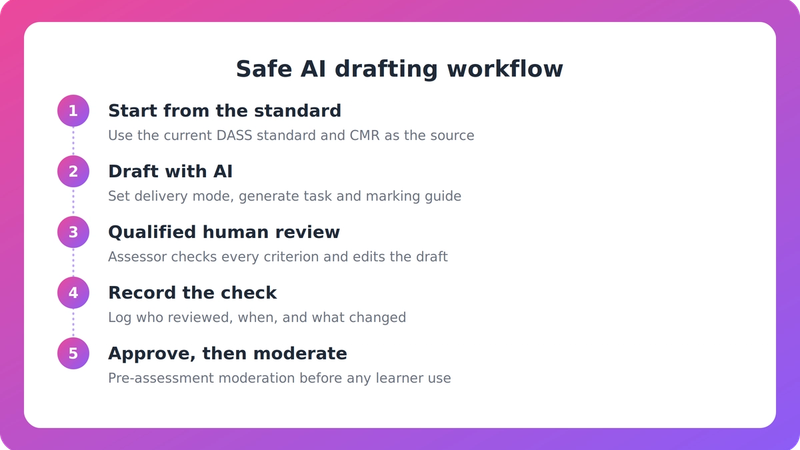
AI can draft NZQA unit standard assessments, but your assessors and moderation system stay accountable. Here is how to choose a tool and run a safe workflow.
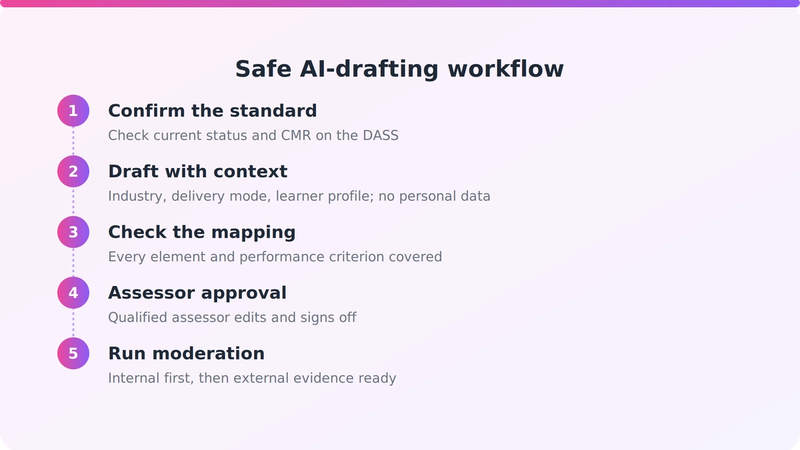
NZQA has no AI-specific tertiary rules, so safe AI assessment writing comes down to your workflow: a mapped draft, a qualified human reviewer and an audit trail.
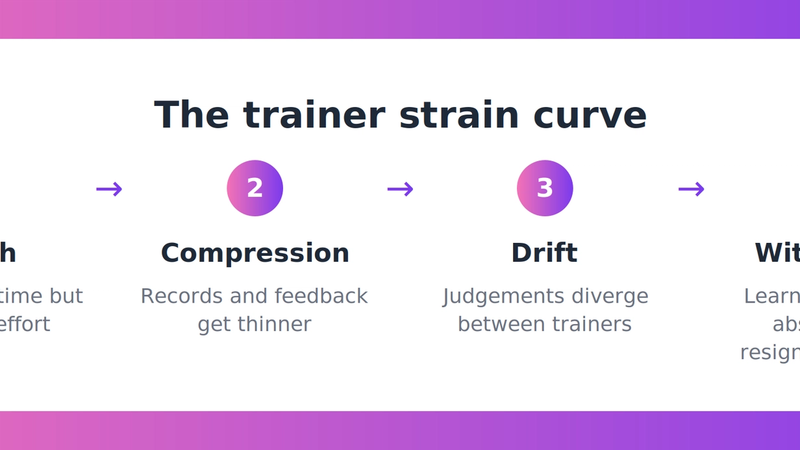
Strain shows up in assessment records, trainer consistency and learner contact long before it reaches a resignation letter. Here is a practical model for catching it first.
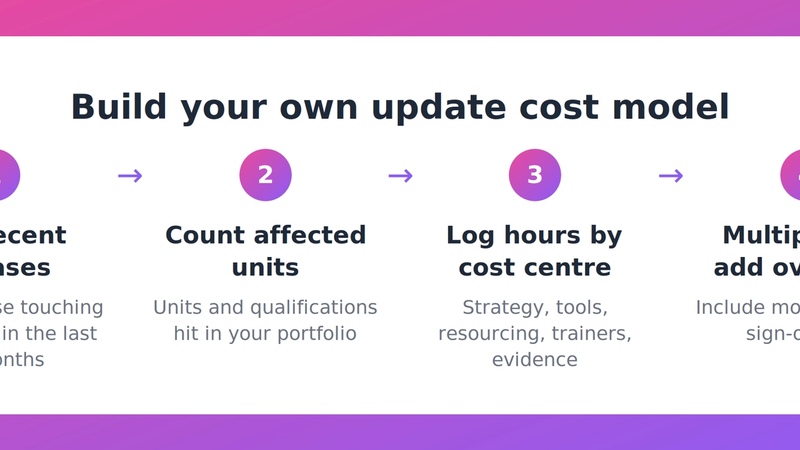
The unit code change is the cheap part. The expensive part is everything it touches downstream.
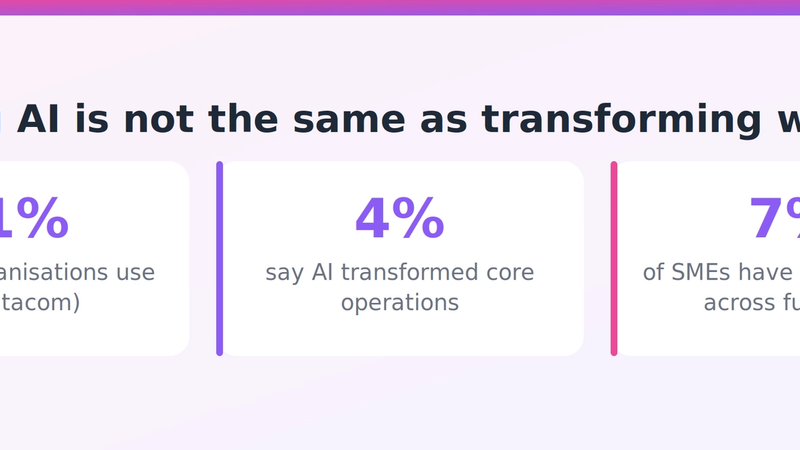
New Zealand's AI adoption headlines look strong, but on the factory floor rostering, timesheets and costing still sit in spreadsheets. Here's why that matters and where to start.
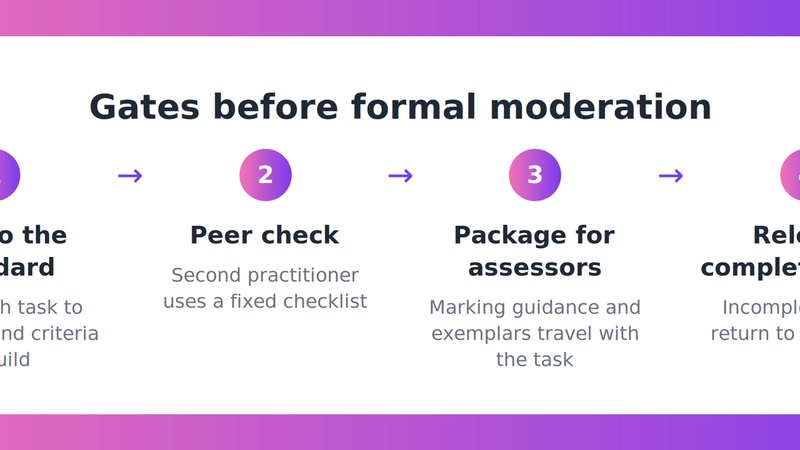
Moderation turns into a bottleneck when it sits outside the delivery plan. Here is how a PTE COO can design quality in earlier instead of absorbing the delay.
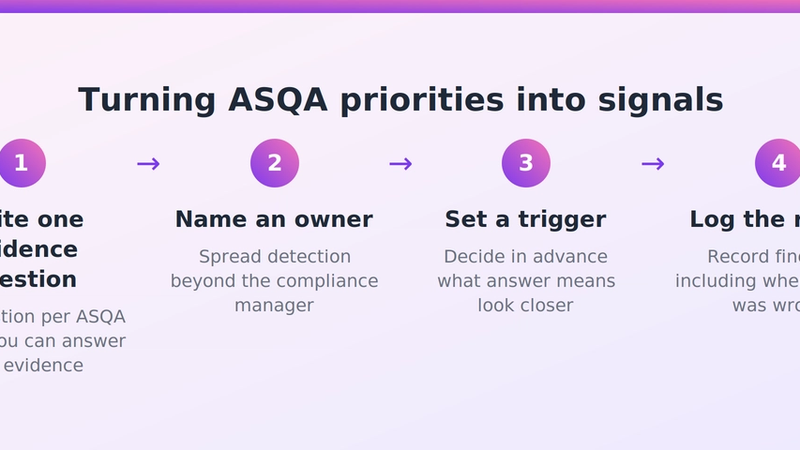
Audits find gaps because RTOs have no internal signal that something is drifting. That is a visibility and ownership problem, and you can fix it without waiting for ASQA's guidance to settle.
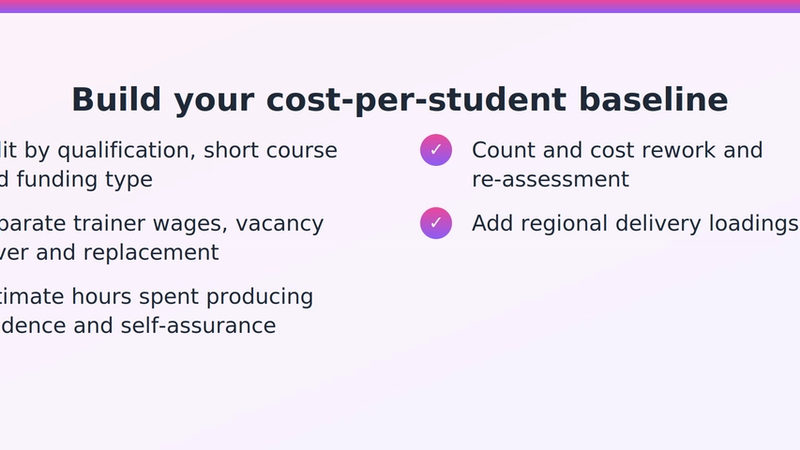
There is no published benchmark for RTO cost per student under the Standards for RTOs 2025, so the first job is building your own view of where margin goes.
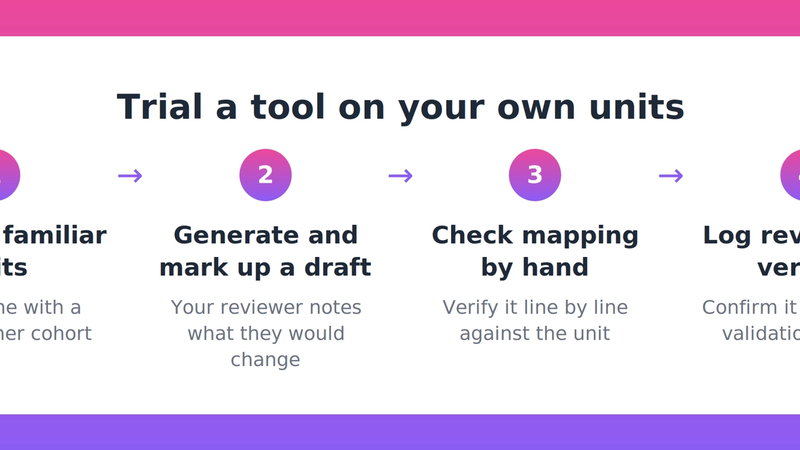
No tool is ASQA-approved, so the real question is which category of software supports your Standard 1.3 review and Standard 1.4 evidence without replacing your accountable people.
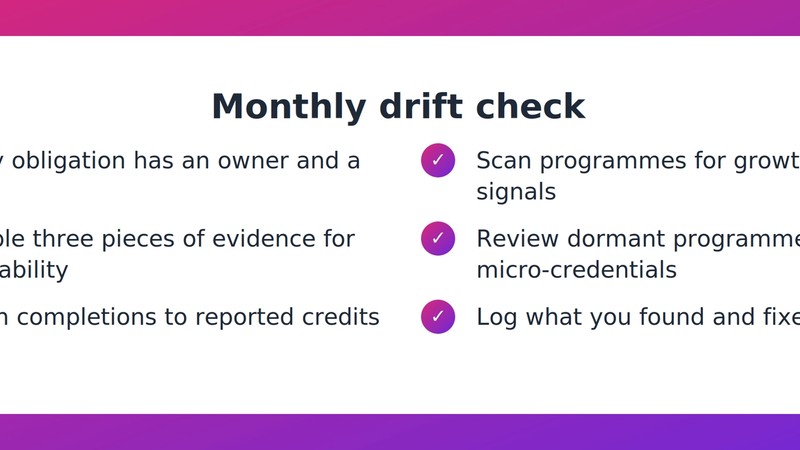
With External Evaluation and Review gone, the biggest risk for a PTE Compliance Manager is gradual slippage between touchpoints. Here is how to spot it first.
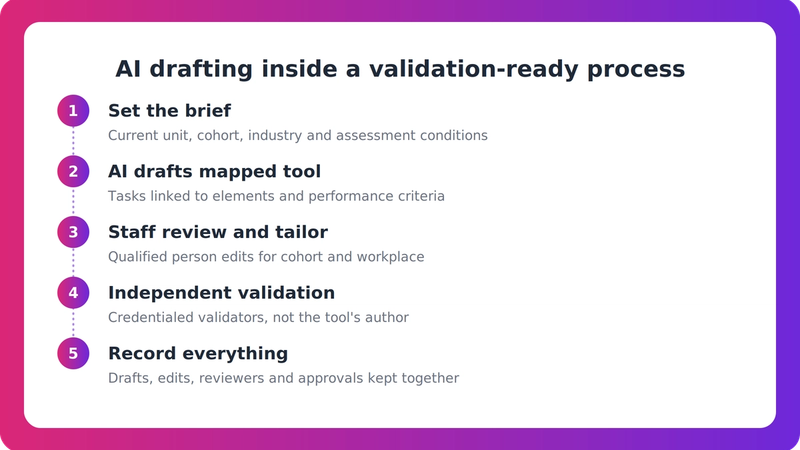
AI can draft assessment tools for Australian RTOs, but review and validation stay with qualified people. Here is how to build the workflow and judge the tools.
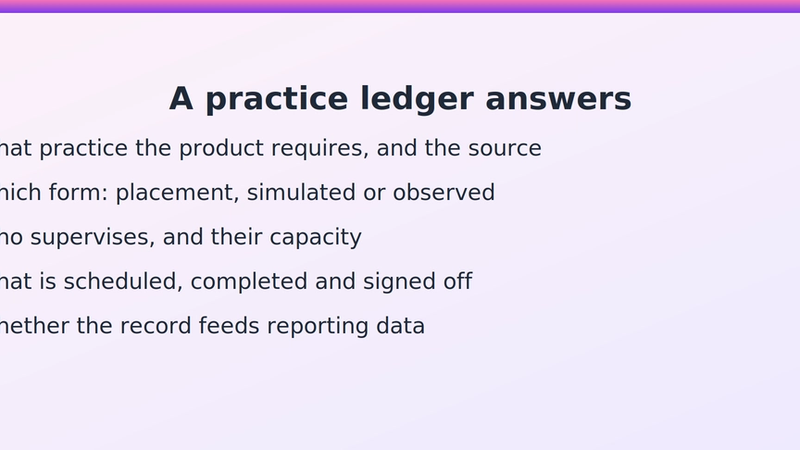
Under the Standards for RTOs 2025, supervised placement, simulated practice and assessor-observed practice belong in your operating model, not in individual trainers' heads.
Nothing in that line yet. New writing lands here first.